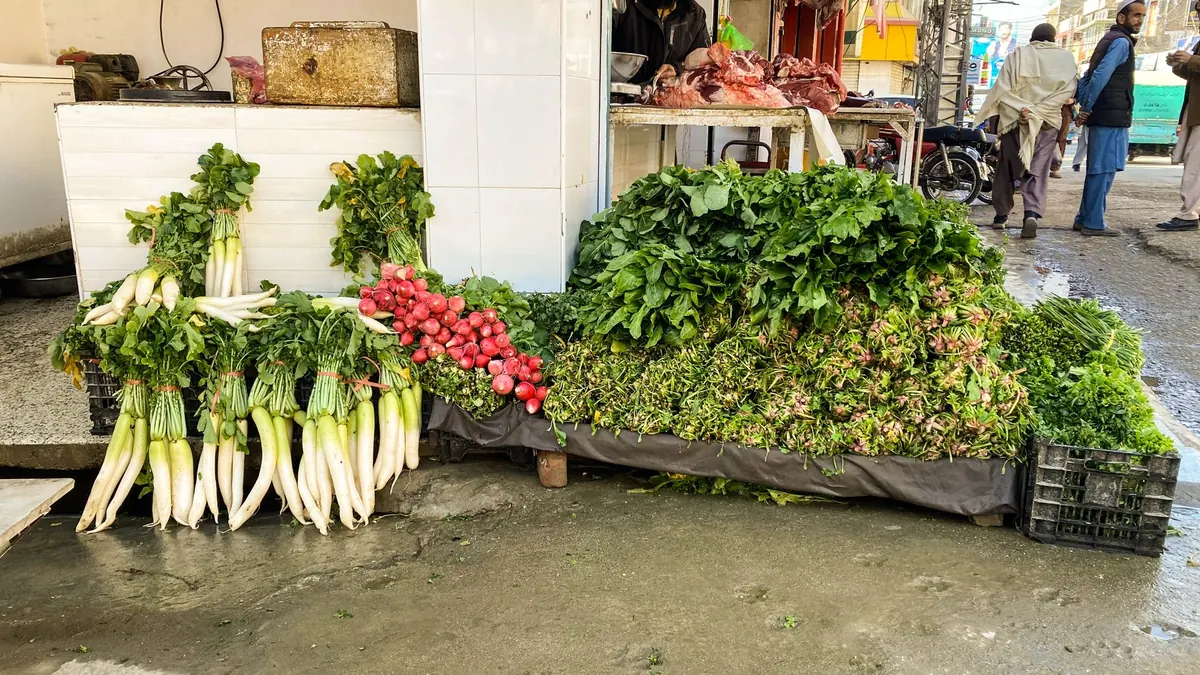
Spring vegetables arrive all at once and then vanish. Blink and the asparagus has gone woody, the radishes have turned soft and hollow, the peas have lost the sweetness that made them worth waiting for. That short window is why they taste so good. Young vegetables want very little from you: a hot pan, a knob of butter, a squeeze of lemon, and enough restraint to stop cooking before they turn dull.
Here are ten dishes built around asparagus, peas, radishes, spring onions and rhubarb. None of them demand special equipment or a long ingredient list. Most take under half an hour, which is the point — the season is short and you have better things to do than stand at the stove.
Spring produce is at its best within a day or two of picking, so the shopping matters as much as the cooking. A few things to check before you pay:
A spring vegetable that needs heavy seasoning to taste like anything was probably picked too late.
Heat the oven to 220°C (425°F). Snap the woody ends off the spears — they break naturally at the right spot — then toss with olive oil, salt and a little grated lemon zest. Spread them in a single layer on a sheet pan, not a pile, and roast for 10 to 12 minutes depending on thickness. They are done when a knife slides in with no resistance but the spears still hold their shape. Finish with lemon juice, shaved parmesan and black pepper. Serve them warm; roasted asparagus goes limp and grey if it sits around.
Cut the roasted or blanched asparagus into short lengths. Soften a handful of sliced spring onions in olive oil over low heat, add the asparagus, then pour over six beaten eggs loosened with a splash of cream or milk and a good pinch of salt. Cook gently until the edges set, then finish under the grill for two or three minutes. The lower the heat, the softer the curd — a frittata cooked fast tastes like rubber. Eat it warm, or at room temperature the next day between bread.
Sweat a chopped onion in butter until soft, add vegetable or chicken stock, and bring to a simmer. Tip in shelled peas (or frozen ones) and cook for three to four minutes — no longer, or they lose their colour and their sweetness. Take the pan off the heat, add a big handful of mint leaves and a knob of butter, and blend. Taste and salt at the end. A spoonful of crème fraîche on top is worth it.
Cook peas briefly, then crush them roughly with a fork along with olive oil, lemon juice, salt and torn mint. Spread ricotta thickly on toasted sourdough, pile the peas on top, and finish with more lemon and a drizzle of good oil. This is the fastest lunch in this collection and one of the best.
Get a wok or wide pan properly hot. Add a little neutral oil, then the peas, and stir for two minutes until they blister in spots but stay crunchy. Add sliced spring onion whites, a splash of soy sauce, a teaspoon of honey and a few drops of rice vinegar. Toss for thirty seconds more, off the heat, and scatter with toasted sesame seeds. Speed is the whole recipe here.
Halve the radishes and roast cut-side down at 230°C (450°F) for 15 to 18 minutes. They lose their bite and turn mild and sweet, somewhere between a turnip and a new potato. Meanwhile brown a few tablespoons of butter with a sprig of thyme until it smells nutty, then spoon it over the radishes with lemon juice, chives and flaky salt.
Slice good bread, spread it generously with salted butter at room temperature, and shingle thin rounds of raw radish on top. Flaky salt and a grind of pepper. That's it — but the radishes must be sliced thin enough to see through, and the butter must be better than you'd normally buy.
Slice radishes thinly, pack into a jar, and cover with a brine of equal parts rice vinegar and water, a teaspoon of sugar and a teaspoon of salt, warmed just until the sugar dissolves. Add a crushed garlic clove if you like. They're ready in an hour, better after a day, and keep for weeks in the fridge — useful on tacos, sandwiches, grain bowls and anything that needs a sharp edge.
Boil short pasta in well-salted water. In a wide pan, soften sliced spring onions and a pinch of chilli in olive oil, then add radish greens, spinach or chopped asparagus and let them wilt. Add the drained pasta with a ladle of cooking water and toss hard until the sauce turns glossy and clings. Finish off the heat with grated parmesan, lemon zest and plenty of black pepper. The starchy water is what makes it a sauce rather than a pile of wet pasta.
Cut rhubarb into lengths, spread in a baking dish, and drizzle with honey and a strip of orange zest. Roast at 190°C (375°F) for 15 to 20 minutes, until the stalks are tender but still holding their shape. Spoon over thick yogurt or porridge, warm or cold, with the syrup from the dish. Rhubarb is very tart, so taste as you go and add more honey if the stalks are young and sharp.
You don't need to cook all ten in seven days. A practical rhythm looks like this: roast a tray of asparagus and a tray of radishes on Sunday, pickle a jar of radishes at the same time, and cook the frittata from whatever is left midweek. Pea soup takes twenty minutes on a night when you can't face much. Save the rhubarb for a weekend when you want the kitchen to smell like something.
Two habits will improve every dish here. Salt in layers rather than all at once at the end, and taste constantly — spring vegetables vary enormously from bunch to bunch, so times and seasonings are suggestions, not instructions. Buy a little less than you think you need, cook it sooner than feels convenient, and let the vegetables do most of the work.
Photo: Amjad ali / Pexels
Oven hot spots, miscalibration, dark pans, and rack position explain most cakes that burn at the edges while staying...
A practical freezer meal prep plan: pick three recipes, batch-cook in stages, portion by meal, and thaw and reheat...
Keep parsley, cilantro, basil and other fresh herbs usable for weeks with simple fridge, counter and freezer...

Fresh recipes and kitchen inspiration for everyday cooking.
