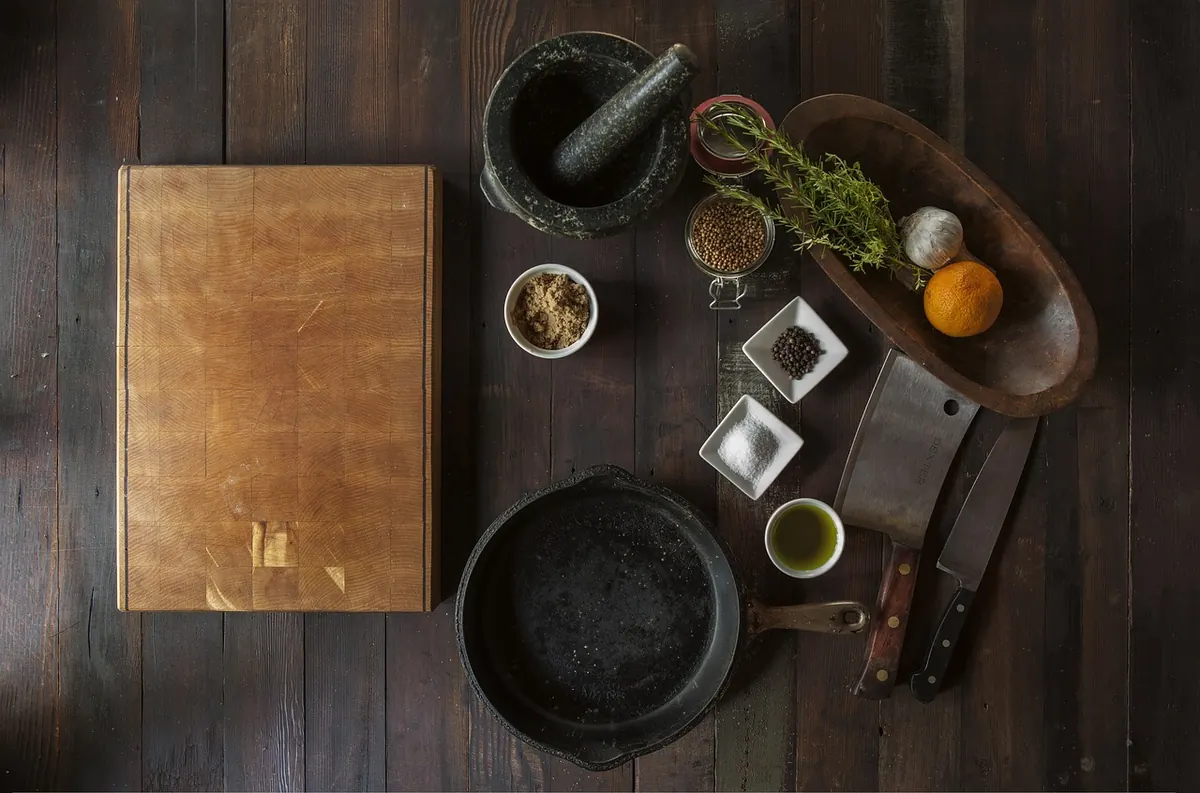
Pull both pans out of the cabinet and the difference is plain before you turn on a burner. One is dark, heavy, and slightly rough, with a surface that looks like it has a history. The other is bright, smooth, and light enough to lift with one hand. Both will cook a pork chop or a batch of fried eggs. But they get there in different ways, and those differences show up in how the food browns, how the pan responds when you turn the heat down, and how much work you do afterward.
Cast iron's defining trait is mass. A 12-inch skillet can weigh as much as a small bowling ball, and all that iron takes time to heat — give it five minutes on medium and it's ready to work. The payoff is stability. Put a cold, thick steak in a hot cast iron pan and the temperature barely dips, so you get a deep, even crust instead of a pan that sulks for two minutes. The trade-off is control. Turn the burner down and the pan keeps cooking at roughly the same heat for a while. Slide it into a hot oven to finish a chicken, and it holds that heat beautifully.
Stainless steel has the opposite personality. Quality clad pans sandwich an aluminum or copper core between layers of steel, and that core moves heat quickly. If a sauce is threatening to break, pull the pan off the burner and the cooking slows almost immediately. The catch is that the pan also drops temperature fast when you add cold food, so searing in batches matters more. Thin stainless — the kind with a disc welded to the bottom — tends to run hot in the middle and cool at the edges.
Think of cast iron as the pan for high, dry heat, and stainless as the pan for anything involving liquid, acid, or a sauce you'll build in the same pan.
There's one compatibility issue worth knowing. Bare cast iron reacts with acidic food. A squeeze of lemon at the end of cooking is fine, but simmering tomato sauce for an hour will strip seasoning and can leave a metallic taste. Stainless is inert, which is why it handles long acidic simmers without complaint.
Seasoning — the layer of polymerized oil that makes cast iron black and slick — is what keeps it from rusting. It builds with use, and it comes off with neglect. The routine is simple, but it does need to happen every time.
Stainless steel asks far less of you. It's dishwasher safe — check the manufacturer, since riveted handles and some finishes disagree — it doesn't care about acidic food, and it never needs seasoning. Scorched spots and rainbow discoloration usually lift with a powdered cleanser and a little effort. Let the pan cool before washing, and skip the cold-water plunge; sudden temperature swings can warp thin pans over time.
Both are oven-safe, but the handles behave differently. Cast iron handles heat slowly and stay hot, so keep a towel nearby. Many stainless handles are hollow and stay cooler on the stovetop, but they still have a temperature limit. Read the specs before sliding a stainless pan under the broiler.
A 10-inch stainless skillet weighs a fraction of its cast iron twin, and that matters at 7 p.m. on a weeknight. Tossing broccoli or folding an omelet is simply easier in stainless. If you have wrist or shoulder trouble, or you're cooking for one in a small kitchen, a heavy skillet can become a reason not to cook.
Cast iron wins in a couple of practical spots. It works on any heat source, including induction and open fire, with no special base required. Stainless needs a magnetic base for induction — most clad pans have one, but not all. Cast iron also survives being dropped, scraped, and abused in a way a polished steel pan does not.
This is the lopsided part of the comparison. A basic cast iron skillet costs less than most stainless pans of the same size, and a well-cared-for one can be handed down. Old cast iron found at a thrift store or in a relative's basement can be stripped and re-seasoned into something better than new.
Good stainless costs more because of the construction: multiple layers bonded across the whole pan, not just a disc on the bottom. A quality clad skillet is a decades-long purchase, and its surface won't chip or flake the way coated pans eventually do. Cheap versions are the real problem — thin walls, hot spots, handles that work loose. If you buy one stainless skillet, buy the heaviest clad pan your budget allows.
If you cook eggs, fish, and pan sauces most nights, start with stainless steel. A 10- or 12-inch clad skillet covers the widest range of everyday cooking. If your meals lean toward searing, frying, cornbread, and oven finishes, cast iron will earn its cabinet space immediately. If you can manage both, buy the cast iron first since it's the smaller investment, and add stainless when you find one you like.
Most cooks end up with one of each, plus a small nonstick pan for eggs if they want it. These two aren't really competitors — they're a division of labor. Cast iron for heat and crust, stainless for control and sauce. Pick the one that matches the way you actually cook this week, and let the other one wait.
Photo: StockSnap / Pixabay
Oven hot spots, miscalibration, dark pans, and rack position explain most cakes that burn at the edges while staying...
A practical freezer meal prep plan: pick three recipes, batch-cook in stages, portion by meal, and thaw and reheat...
Keep parsley, cilantro, basil and other fresh herbs usable for weeks with simple fridge, counter and freezer...

Fresh recipes and kitchen inspiration for everyday cooking.
